
We help more people become behavioral health workers.
Founded June 30, 2026
Who are you?
Choose the path that fits you, and we'll take you to the right part of the University.
Building Hope. Saving Lives.
Hamilton Center's journey to becoming a Certified Community Behavioral Health Clinic — 24-hour crisis response and care for everyone, regardless of ability to pay.

We serve our communities by providing accessible, compassionate, person-centered care that empowers each unique journey towards wellness and recovery.
Learn, serve, believe.
Our Motto
Learn. Serve. Believe.
Three words that guide every decision, every course, and every conversation at THE University of Hamilton Center, Inc. — and connect directly to the daily work of transforming the behavioral health workforce.
Learn
UH exists to raise the skills of the behavioral health workforce — from elementary students just discovering what a counselor does, to graduate students preparing for licensure, to seasoned professionals sharpening their craft. Every course, every workshop, every publication is built around one idea: people cannot become what they have never been taught to see. Learning is the foundation of the pipeline.
Serve
UH exists to serve — piloting new models in Region 5, sharing proven strategies with partner agencies, and consulting nationwide on the three roles where the shortage is most critical: Licensed Clinical Social Workers, Nurse Practitioners, and Child Psychologists. Service means meeting communities where they are and showing the field what works, not just talking about it.
Believe
At the center of everything is a simple belief: lived experience qualifies people for this work. The student who has walked through mental illness in their own family, the veteran who has faced crisis, the community member who has lost someone — they are not disqualified by their story. They are called by it. Belief is what turns a personal hardship into a professional calling.
Learn the skills. Serve the field. Believe in the people who have lived it — because they are exactly who this work needs.
The Challenge
A University Built to Solve
a National Problem
The United States does not have enough mental health workers. This is one of the worst shortages in our history. Government data shows that about four in ten Americans — about 137 million people — live in areas that do not have enough mental health workers. The shortage is expected to get worse in the coming years.
This shortage hits hardest in rural areas, struggling schools, and neighborhoods where young people have never met a counselor or social worker who looks like them or grew up like they did.
"The problem is not just that we need more mental health workers. Too many young people never picture themselves doing this work."
137M
Americans in areas with too few workers
4 in 10
Living without enough access to care
42
Countries that tested the research
Our Story
Where UH Comes From
The story of the THE University of Hamilton Center, Inc. begins with one person and one vision. In 2024, Melvin L. Burks — President and CEO of Hamilton Center, Inc. — shared a bold idea with his leadership team. He believed Hamilton Center should build its own university. Not to compete with other schools, but to do something no other university had done: transform the behavioral health workforce pipeline from the inside out.
It was the same kind of thinking that had guided Burks for over forty years. He joined Hamilton Center in 1979 as a front desk receptionist and never left. Over nine promotions, he rose to the CEO's office. Along the way, he created the Hamilton Center Foundation in 2012 — a fast, flexible source of funding that backed millions in new programs, from WIN Recovery clinics to crisis response systems. Now he believed a university could do for the workforce what the Foundation did for funding: open doors that nothing else could.
Burks turned to Art Fuller, then Chief of CCBHC. In December 2024, Fuller submitted a formal founding proposal that expanded the vision to a national scale — built on peer-reviewed, IRB-approved research from his doctoral studies. On June 30, 2026, that vision became reality: the THE University of Hamilton Center, Inc. opened alongside the Hamilton Center Foundation, which is being established as its own standalone organization — built on the unmatched history of Hamilton Center, Inc. Paperwork is being filed now, and official partnerships will begin in January 2027.
"The Foundation proved what happens when Melvin Burks builds something new. THE University of Hamilton Center, Inc. is his next great vision — and it aims to have just as much, if not a greater, impact."
Every part of Hamilton Center's history — fifty years of serving communities, a Foundation built to move fast, a CEO who rose from the front desk — eventually ran into the same problem: even the best treatment program is only as good as the workers available. Melvin Burks saw that. THE University of Hamilton Center, Inc. is his answer.
One vision. One leader. One university built to carry the mission forward for the next fifty years.
The Crisis at Home
The State of Indiana
Indiana is one of the states with the fewest mental health workers in the country. Every county is affected — and these are exactly the communities UH was built to help.
92 / 92
Counties designated as shortage areas
Every Indiana county needs more mental health workers.
1M+
Adults living with a mental health condition
About one in six people in Indiana are affected.
345,000
Adults who need care but don't receive it
Rural areas feel this gap the most.
44th
National ranking for workforce availability
Indiana ranks near the bottom of the nation for mental health workers.
Indiana's crisis is real. It affects families, schools, and communities across the state. THE University of Hamilton Center, Inc. was built here, and our plan starts here first.
See the National Problem →Our Heritage
The History of Hamilton Center
From a mother's promise in the 1950s to the start of a university in 2026 — over fifty years of serving communities with care and dignity.
1950s – 1963
A Mother's Promise
In the late 1950s, Katherine Hamilton faced a very hard problem. A family member had a serious mental illness. At that time, there was almost no good care available close to home. Families like hers had few choices except to send loved ones far away to state institutions. In 1963, President John F. Kennedy signed the Community Mental Health Centers Act — a law that gave states money to build local mental health centers for the first time.
"On my twenty-fifth birthday, I was called upon to sign my twenty-seven year old sister over to the custodial care of those appointed by the State of Massachusetts to care for its people with mental illness. I was soon to learn they could not help her. Diagnosis, schizophrenia. Recommendations, none. Prognosis, steady downhill course."
— Katherine Hamilton
50+
Years of service
11
Indiana counties served
20+
Locations statewide
13,000
People served each year
Beyond Indiana
A National Template
UH's research, books, and scholarship program point to a plan that can be used across the country to close the mental health worker shortage from the inside out.
Career Awareness
A plan that does not depend on meeting the right guidance counselor. Instead, it depends on a story reaching young people where they already are — a classroom, a locker room, a community center, or a bookshelf.
Stigma Reduction
Built on facts, not guesses. Real, professionally published stories are adapted for everyone — from kindergarten classrooms to business boardrooms — sharing the same core truth at every level.
Self-Regenerating Pipeline
Today's published storyteller becomes tomorrow's mentor. Their story becomes the reason the next person decides to enter the field — a workforce that keeps rebuilding itself.
Built to Travel
ULEP's interview process does not require you to be a writer. It can grow to any community, school, or region willing to follow UH's publishing standards — tested across 42 countries.
UH is still young. It opened on June 30, 2026. Art Fuller, our founding leader, started building the university on July 1, 2026. But our work is not just ideas. Our research has been tested at a large scale. Our books are already making a difference. And our first book is already written.
A University Built to Help Solve a National Problem
The behavioral health workforce crisis is national. So is the movement behind it — proof that lives change when a story is told, heard, and put to work.
Titan of Life
The Transformational Journey of Melvin L. Burks
Melvin L. Burks Publishing LLC, in partnership with J Ellington Publishing LLC · First Edition 2026 · Foreword by Art Fuller
A 23-chapter autobiography about growing up in abject poverty in Hammond, Indiana, and rising to lead one of Indiana's largest community mental health providers — a real, raw story about identity, struggle, mentorship, and a lifetime of service.

Explore the Interactive Map
200+ colleges and universities across 25+ states and 8 countries — each marker a story of purpose.
Open on titanoflife.comA Generation in Crisis
Mental Health Trends Among
Our Youth
The numbers facing teens and young adults today are sobering. Behind every statistic is a young person who needs a trained, compassionate professional — and that is exactly the workforce UH exists to build.
1 in 5
Youth aged 13–18
live with a mental health condition, yet roughly half never receive treatment.
42%
High school students
reported persistent feelings of sadness or hopelessness in the most recent CDC survey.
50%
Lifelong conditions
of all lifetime mental illness begins by age 14, and 75% by age 24 — making early support critical.
#2
Cause of death
Suicide is the second leading cause of death among people aged 10–24 in the United States.
These trends are why THE University of Hamilton Center trains the behavioral health workforce of tomorrow — so that every young person who reaches out finds someone ready to help.
From the Founding Provost
Hello and Welcome
Art Fuller, Founding Provost of the THE University of Hamilton Center, Inc.
It is an honor to speak for the Board of Directors and the communities that the THE University of Hamilton Center, Inc. serves — and to welcome you as Founding Provost.
Since joining Hamilton Center in 2020, right before Covid hit, the one thing I can say for sure is this: after working for over 30 years, there is no other place like Hamilton Center. I saw that most clearly during Covid.
This organization did not lay off any employees.
This organization did not reduce the working hours for any staff members.
This organization continued to provide bonuses.
This organization continued to provide salary increases.
What that showed me is that the words on the page about Hamilton Center are true. You see it every day in Melvin L. Burks. He's our President and CEO. His vision is clear, and he always follows through on it.
"Any idea or thought that you might have about what the University of Hamilton Center might be, one thing I can guarantee you: it's going to be much bigger, much broader, much wider, much deeper than whatever you're thinking right now."
We are here to serve our community, and the University of Hamilton Center is the next step in building our mental health workforce.
Our Approach
Three Pillars, One Mission
UH works with communities to change how mental health workers are trained and hired.
Leadership Development
Training the next group of mental health leaders through mentoring, hands-on courses, and the real-world lessons of experienced leaders.
Talent Upskilling
Building certificate programs, hands-on training, and an online learning platform that help people already working in or near the field get fully trained and certified.
Publishing & Training
Turning real stories of struggle, service, and recovery into professionally published books, courses, and learning materials that reach far beyond a single classroom.
These three parts work together. A student who reads a story about mental health work may earn a UH scholarship, train in our program, and one day share their own story to inspire the next student.
The Organizational Plan
How UH Is Built
A clear framework for the THE University of Hamilton Center, Inc. — its goals, structure, timeline, and funding plan. Prepared by Art Fuller, Founding Provost, and formally announced on June 30, 2026.
UH Mission
"Collaborate with communities to transform the behavioral health workforce pipeline."
Transform Training
Change how training works inside Hamilton Center, making it better and easier to access for every employee.
Grow the Workforce
Help build a stronger pipeline of mental health workers so more people can get the care they need.
Reduce Stigma
Lower the shame around mental health in communities and workplaces through stories and education.
Performance Dashboard
UH will track and report these metrics every year:
Risk Management
UH will maintain a risk plan covering these areas:
Required Learning Module
The Story of Hamilton Center
Every member of our community is asked to learn this story. Read the lesson, then answer the questions below to complete the module — the full timeline follows just beneath.
1971 – Present
The Story of Hamilton Center
A Promise That Built an Institution
Hamilton Center began with one mother's promise. In the late 1950s, Katherine Hamilton had to send her sister to a distant state hospital because no good care existed close to home. She promised to change that. The 1963 Community Mental Health Centers Act gave states money to build local mental health centers, and in 1971 Hamilton Center opened its first office in Vigo County — bringing care close to home for the first time.
Growing County by County
Hamilton Center never grew from the top down. Each new county was added because a community asked for help. From the original six counties in the 1970s, it grew into an eleven-county system with more than 20 locations, serving about 13,000 people each year. In 2020, Knox County became the 11th county, added with a new opioid treatment program.
Answering the Opioid Crisis
As the opioid crisis worsened, Hamilton Center built WIN Recovery — one of the region's first major responses. WIN Recovery opened in Vigo County in 2018 and expanded into Knox and Hendricks counties in 2020, offering medication-assisted treatment, counseling, and case management. The Hamilton Center Foundation gave $600,000 to help launch the new clinics.
Leadership and a Foundation for New Ideas
Melvin L. Burks joined as a front desk receptionist on June 9, 1979 and became President and CEO in 2012 — nine promotions over 47 years, guided by one belief: 'Consumers 1st.' The same year he became CEO, the Hamilton Center Foundation was created to fund new ideas quickly, backing everything from WIN Recovery to staff training across ten counties.
From CCBHC to a University
On January 1, 2025, Hamilton Center became one of only eight Certified Community Behavioral Health Clinic pilot sites in Indiana, offering 24-hour crisis response and care regardless of ability to pay. A year and a half later, on June 30, 2026, leadership announced THE University of Hamilton Center, Inc. — a university built to train the behavioral health workforce the field desperately needs, carrying the same belief forward: care should be close to home.
Key Takeaways
- •Hamilton Center was founded on a mother's promise that care should be close to home, opening its first office in Vigo County in 1971.
- •It grew into an eleven-county system serving about 13,000 people a year and built WIN Recovery to answer the opioid crisis.
- •Under CEO Melvin L. Burks and the Hamilton Center Foundation, it became a CCBHC pilot site in 2025 and launched UH in 2026.
Check Your Understanding
1. Whose promise led to the founding of Hamilton Center?
2. What major designation did Hamilton Center earn on January 1, 2025?
3. What was announced on June 30, 2026?
Founding Research
The Naming Gap
UH started with a simple question: why do so many young people, especially from groups that are often left out, never think about working in mental health?
Art Fuller's research at the University of Indianapolis found what he calls the Naming Gap. Many schools and groups never help young people see that their life experiences could lead to a career in mental health.
A student who has helped a struggling parent, guided a younger sibling, or dealt with their own anxiety or sadness already has what it takes to be a counselor or social worker. No one has told them that. UH exists to change that.
Research Validation
2,100+
People surveyed
42
Countries represented
347
Schools and groups included
1
New way of thinking
This research is the base for everything UH builds — our courses, our books, and our scholarship program.
Publications Initiative
UH Lived Experiences
Publications
A person's own life story, told in their own words and published as a real book, is one of the best ways to fight stigma and help people learn about mental health careers.
UH's First Publication
Titan of Life: The Transformational Journey of Melvin L. Burks
Created through ULEP's guided interview process — showing that the model works. A set of guided interviews turned into a finished, professionally published book.
How It Works
60-Minute Interview
A guided conversation — no writing experience needed from the person sharing their story.
Editorial Development
ULEP's team turns the interview into a fully written, professionally published chapter.
Professional Publication
The story is published to professional standards and distributed to reach communities.
Lasting Impact
Published stories become tools that help the next generation learn about careers and fight stigma.
ULEP grows with a person through their whole life. It starts with simple activities for young students and goes all the way to full book publishing for adults. We protect anyone under eighteen — they need a parent's permission, and their stories stay private by default.
Signature Initiative
The Titan of Life
Scholarship
The Titan of Life Scholarship is UH's first major program. It is based on the life lessons in the book Titan of Life. The scholarship helps students — starting in middle school and going through college — learn about careers in mental health, community leadership, and public service.
It is open to all students. This includes athletes, students who are the first in their family to go to college, homeschooled students, and students from rural areas.
Mentoring and community involvement
Hands-on experience with mental health careers
A path from middle school through college
Open to everyone, no exceptions
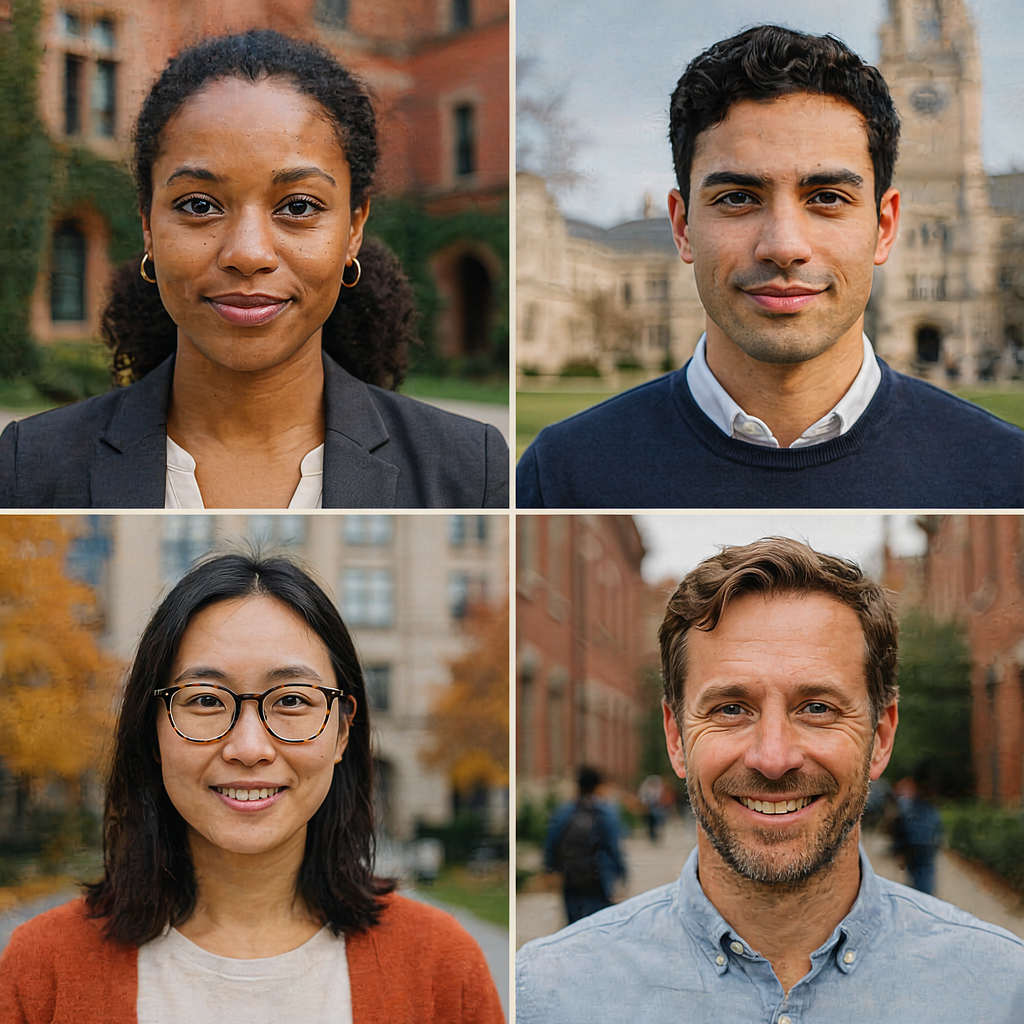
A Cycle That Keeps Growing
Every mentor and coach who joins can share their story in a ULEP book. Every scholarship winner can also have their story published. This creates new stories that inspire the next group of students.
Built on Peer-Reviewed,
IRB-Approved Research
UH is grounded in doctoral research from the University of Indianapolis. The Founding Provost's dissertation studied how college students perceive mental and behavioral health careers — and discovered a powerful shift in perspective that can happen much earlier in a student's life.
Explore the Research2,000+
Students tested
10
States studied
50+
University partnerships
Get in Touch
Join Us in Building
the Future
To learn more about UH, our books, or the Titan of Life Scholarship, please reach out to our leadership team.
Contact the Office of the Provost